bonds

How are Series EE Savings Bonds Taxed?

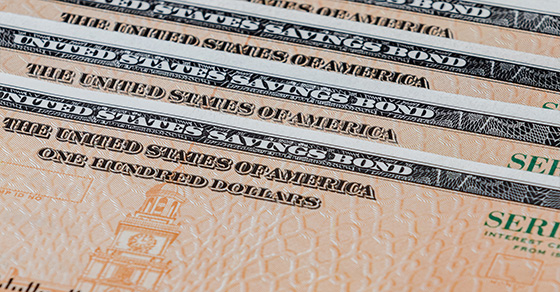
Savings bonds are purchased by many Americans, often as a way to help fund college or show their patriotism. Series EE bonds, which replaced Series E bonds, were first issued in 1980. From 2001 to 2011, they were designated as “Patriot Bonds” as a way for Americans “to express support for our nation’s anti-terrorism efforts,” according to the U.S. Treasury Department.

Perhaps you purchased some Series EE bonds many years ago and put them in a file cabinet or safe deposit box. Or maybe you bought them electronically and don’t think about them often. You may wonder: How is the interest you earn on EE bonds taxed? And if they reach final maturity, what steps do you need to take to ensure there’s no loss of interest or unanticipated tax consequences?

How interest accrues

Series EE bonds don’t pay interest currently. Instead, the accrued interest is reflected in the redemption value of the bond. The U.S. Treasury issues tables […]

By |2024-07-29T20:39:45+00:00July 29th, 2024|tax, tax basis, tax implications|0 Comments

Tax-Wise Ways To Save For College

If you’re a parent or grandparent with college-bound children, you may want to save to fund future education costs. Here are several approaches to take maximum advantage of the tax-favored ways to save that may be available to you.

Savings bonds 

Series EE U.S. savings bonds offer two tax-saving opportunities when used to finance college expenses:

  1. You don’t have to report the interest on the bonds for federal tax purposes until the bonds are cashed in, and
  2. Interest on “qualified” Series EE (and Series I) bonds may be exempt from federal tax if the bond proceeds are used for qualified college expenses.

To qualify for the college tax exemption, you must purchase the bonds in your own name (not the child’s) or jointly with your spouse. The proceeds must be used for tuition, fees, etc. — not room and board. If only some proceeds are used for qualified expenses, only that part of the interest is exempt.

If your modified adjusted gross income (MAGI) exceeds certain amounts, the exemption is phased out. For bonds cashed in 2023, the exemption begins to phase out when joint MAGI hits $137,800 for married joint filers ($91,850 for other returns) […]

By |2023-01-16T14:33:45+00:00January 16th, 2023|contributions, savings|0 Comments

Tax-Favored Ways to Build up a College Fund

If you’re a parent with a college-bound child, you may be concerned about being able to fund future tuition and other higher education costs. You want to take maximum advantage of tax benefits to minimize your expenses. Here are some possible options.

Savings bonds

Series EE U.S. savings bonds offer two tax-saving opportunities for eligible families when used to finance college:

  • You don’t have to report the interest on the bonds for federal tax purposes until the bonds are cashed in, and
  • Interest on “qualified” Series EE (and Series I) bonds may be exempt from federal tax if the bond proceeds are used for qualified education expenses.

To qualify for the tax exemption for college use, you must purchase the bonds in your name (not the child’s) or jointly with your spouse. The proceeds must be used for tuition, fees and certain other expenses — not room and board. If only part of the proceeds is used for qualified expenses, only that part of the interest is exempt.

The exemption is phased out if your adjusted gross income (AGI) exceeds certain amounts.

529 plans

A qualified tuition program (also known as a 529 plan) allows you to buy […]

How Series EE Savings Bonds Are Taxed

Many people have Series EE savings bonds that were purchased many years ago. Perhaps they were given to your children as gifts or maybe you bought them yourself and put them away in a file cabinet or safe deposit box. You may wonder: How is the interest you earn on EE bonds taxed? And if they reach final maturity, what action do you need to take to ensure there’s no loss of interest or unanticipated tax consequences?

Fixed or variable interest

Series EE Bonds dated May 2005, and after, earn a fixed rate of interest. Bonds purchased between May 1997 and April 30, 2005, earn a variable market-based rate of return.

Paper Series EE bonds were sold at half their face value. For example, if you own a $50 bond, you paid $25 for it. The bond isn’t worth its face value until it matures. (The U.S. Treasury Department no longer issues EE bonds in paper form.) Electronic Series EE Bonds are sold […]

By |2020-11-24T18:23:31+00:00November 24th, 2020|investment, savings|0 Comments

When is Tax Due on Series EE Savings Bonds?

09_23_19_1172222266_ITB_560x292

You may have Series EE savings bonds that were bought many years ago. Perhaps you store them in a file cabinet or safe deposit box and rarely think about them. You may wonder how the interest you earn on EE bonds is taxed. And if they reach final maturity, you may need to take action to ensure there’s no loss of interest or unanticipated tax consequences.

Interest deferral

Series EE Bonds dated May 2005 and after earn a fixed rate of interest. Bonds purchased between May 1997 and April 30, 2005, earn a variable market-based rate of return.

Paper Series EE bonds were sold at half their face value. For example, if you own a $50 bond, you paid $25 for it. The bond isn’t worth its face value until it has matured. (The U.S. Treasury Department no longer issues EE bonds in paper form.) Electronic Series EE Bonds are sold at face value and are worth their full […]

By |2020-09-03T20:03:37+00:00September 25th, 2019|tax|0 Comments
Go to Top