filing

Discover If You Qualify for “Head of Household” Tax Filing Status

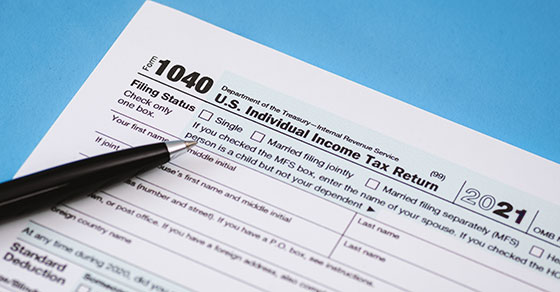
When we prepare your tax return, we’ll check one of the following filing statuses: single, married filing jointly, married filing separately, head of household or qualifying widow(er). Only some people are eligible to file a return as a head of household. But if you’re one of them, it’s more favorable than filing as a single taxpayer.

To illustrate, the 2025 standard deduction for a single taxpayer is $15,000. However, it’s $22,500 for a head of household taxpayer. To be eligible, you must maintain a household that, for more than half the year, is the principal home of a “qualifying child” or other relative of yours whom you can claim as a dependent.

Tax law fundamentals

Who’s a qualifying child? This is one who:

  • Lives in your home for more than half the year,
  • Is your child, stepchild, adopted child, foster child, sibling, stepsibling (or a descendant of any of these),
  • Is under age 19 (or a student under 24), and
  • Doesn’t provide over half of his or her own support for the year.

If the parents are divorced, the child will qualify if he or she meets these tests for the custodial parent — […]

By |2025-04-01T17:00:05+00:00April 1st, 2025|head of household|0 Comments

Appeals Court Reinstates Injunction Halting BOI Enforcement

On December 26, 2024, the Fifth Circuit Court of Appeals reinstated a nationwide injunction against the enforcement of the Corporate Transparency Act (CTA), temporarily pausing the requirement for companies to disclose their Beneficial Ownership Information (BOI) to the U.S. Treasury’s Financial Crimes Enforcement Network (FinCEN).

This decision reverses an earlier ruling by the same court, which had lifted the injunction and allowed the CTA’s enforcement to proceed. The reinstated injunction means that the January 13, 2025, deadline for companies to submit their BOI reports is currently on hold while the court decides the case.

Key Points to Know:

  • What is the Corporate Transparency Act?
    Enacted in 2021, the CTA requires corporations and limited liability companies to report information about their beneficial owners to FinCEN to combat financial crimes like money laundering.
  • Why was the injunction reinstated?
    The court seeks to maintain the status quo while considering constitutional arguments raised by opponents, who claim the law infringes on privacy and imposes unnecessary burdens on small businesses.
  • What does this mean for businesses?
    • January 13, 2025 Deadline on Hold: Companies are not required to file BOI reports until further […]
By |2024-12-27T18:28:06+00:00December 27th, 2024|filing deadline, New Tax Laws, News|0 Comments

Filing Jointly or Separately as a Married Couple: What’s the Difference?

When you file your tax return, a tax filing status must be chosen. This status is used to determine your standard deduction, tax rates, eligibility for certain tax breaks and your correct tax.

The five filing statuses are:

  • Single
  • Married filing jointly,
  • Married filing separately,
  • Head of household, and
  • Qualifying surviving spouse.

If you’re married, you may wonder if you should file joint or separate tax returns. It depends on your individual tax situation.

In general, you should choose the filing status that results in the lowest tax. But keep in mind that, if you and your spouse file a joint return, each of you is “jointly and severally” liable for the tax on your combined income. And you’re both equally liable for any additional tax the IRS assesses, plus interest and most penalties. That means the IRS can come after either of you to collect the full amount.

Although there are “innocent spouse” provisions in the law that may offer relief, they have limitations. Therefore, even if a joint return results in less tax, some people may still choose to file separately if they want to only be responsible for their own tax. This might […]

By |2024-02-09T15:06:08+00:00February 8th, 2024|tax implications, tax planning|0 Comments

Questions You May Still Have After Filing Your Tax Return

If you’ve successfully filed your 2022 tax return with the IRS, you may think you’re done with taxes for another year. But some questions may still crop up about the return. Here are brief answers to three questions that we’re frequently asked at this time of year.

When will your refund arrive?

The IRS has an online tool that can tell you the status of your refund. Go to irs.gov and click on “Get Your Refund Status.” You’ll need your Social Security number, filing status and the exact refund amount.

Which tax records can you throw away now? 

At a minimum, keep tax records related to your return for as long as the IRS can audit your return or assess additional taxes. In general, the statute of limitations is three years after you file your return. So you can generally get rid of most records related to tax returns for 2019 […]

By |2023-05-09T15:01:54+00:00May 9th, 2023|refunds, tax implications|0 Comments
Go to Top