retirement

How to Ensure Life Insurance Isn’t Part of Your Taxable Estate

If you have a life insurance policy, you may want to ensure that the benefits your family will receive after your death won’t be included in your estate. That way, the benefits won’t be subject to federal estate tax.

Current exemption amounts

For 2021, the federal estate and gift tax exemption is $11.7 million ($23.4 million for married couples). That’s generous by historical standards but in 2026, the exemption is set to fall to about $6 million ($12 million for married couples) after inflation adjustments — unless Congress changes the law.

In or out of your estate

Under the estate tax rules, insurance on your life will be included in your taxable estate if:

  • Your estate is the beneficiary of the insurance proceeds, or
  • You possessed certain economic ownership rights (called “incidents of ownership”) in the policy at your death (or within three years of your death).

It’s easy to avoid the first situation by making sure your estate isn’t designated as the policy beneficiary.

The second rule is more complicated. Just having someone else possess legal title to the policy won’t prevent the proceeds from being included in your estate if you keep “incidents of ownership.” Rights […]

By |2021-04-01T16:52:44+00:00April 1st, 2021|estate, estate tax|0 Comments

Get Credit for IRA Contributions Made by April 15 on 2020 Tax Returns

The Internal Revenue Service notes that taxpayers of all ages may be able to claim a deduction on their 2020 tax return for contributions to their Individual Retirement Arrangement made through April 15, 2021. There is no longer a maximum age for making IRA contributions.

An IRA is designed to enable employees and the self-employed to save for retirement. Most taxpayers who work are eligible to start a traditional or Roth IRA or add money to an existing account.

Contributions to a traditional IRA are usually tax deductible, and distributions are generally taxable. There is still time to make contributions that count for a 2020 tax return, if they are made by April 15, 2021. Taxpayers can file their return claiming a traditional IRA contribution before the contribution is actually made. The contribution must then be made by the April due date of the return. While contributions to a Roth IRA are not tax deductible, qualified distributions are tax-free. In addition, low- and moderate-income taxpayers making these contributions may also qualify for the Saver’s Credit.

Generally, eligible taxpayers can contribute up to $6,000 to an IRA for 2020. For […]

By |2021-03-12T17:04:38+00:00March 12th, 2021|401k, ira, retirement|0 Comments

Retiring Soon? Recent Law Changes May Have an Impact on Your Retirement Savings

If you’re approaching retirement, you probably want to ensure the money you’ve saved in retirement plans lasts as long as possible. If so, be aware that a law was recently enacted that makes significant changes to retirement accounts. The SECURE Act, which was signed into law in late 2019, made a number of changes of interest to those nearing retirement.

You can keep making traditional IRA contributions if you’re still working 

Before 2020, traditional IRA contributions weren’t allowed once you reached age 70½. But now, an individual of any age can make contributions to a traditional IRA, as long as he or she has compensation, which generally means earned income from wages or self-employment. So if you work part time after retiring, or do some work as an independent contractor, you may be able to continue saving in your IRA if you’re otherwise eligible.

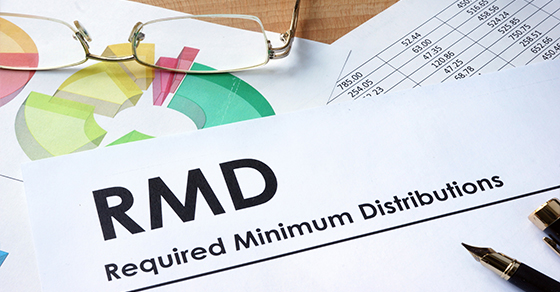
The required minimum distribution (RMD) age was raised from 70½ to 72. 

By |2021-03-02T21:48:58+00:00March 2nd, 2021|ira, New Tax Laws, retirement, roth ira, savings|0 Comments

Should Your Business Add Roth Contributions to its 401(k)?

If your business sponsors a 401(k) plan, you might someday consider adding designated Roth contributions. Here are some factors to explore when deciding whether such a feature would make sense for your company and its employees.

Key differences

Roth contributions differ from other elective deferrals in two key tax respects. First, they’re irrevocably designated to be made on an after-tax basis, rather than pretax. Second, if all applicable requirements are met and the distribution constitutes a “qualified distribution,” the earnings won’t be subject to federal income tax when distributed.

To be qualified, a distribution generally must occur after a five-year waiting period, as well as after the participant reaches age 59½, becomes disabled or dies. Because of the different tax treatment, plans must maintain separate accounts for designated Roth contributions.

Pluses and minuses

The Roth option gives participants an opportunity to hedge against the possibility that their income tax rates will be higher in retirement. However, if tax rates fall or participants are in lower tax brackets during retirement, Roth contributions may provide less after-tax retirement income than comparable pretax contributions. The result could also be worse than that of ordinary elective deferrals if Roth amounts aren’t […]

By |2021-02-24T18:46:47+00:00February 24th, 2021|401k, roth ira|0 Comments

Didn’t Contribute to an IRA Last Year? There Still May Be Time

If you’re getting ready to file your 2020 tax return, and your tax bill is higher than you’d like, there might still be an opportunity to lower it. If you qualify, you can make a deductible contribution to a traditional IRA right up until the April 15, 2021 filing date and benefit from the tax savings on your 2020 return.

Who is eligible?

You can make a deductible contribution to a traditional IRA if:

  • You (and your spouse) aren’t an active participant in an employer-sponsored retirement plan, or
  • You (or your spouse) are an active participant in an employer plan, but your modified adjusted gross income (AGI) doesn’t exceed certain levels that vary from year-to-year by filing status.

For 2020, if you’re a joint tax return filer and you are covered by an employer plan, your deductible IRA contribution phases out over $104,000 to $124,000 of modified AGI. If you’re single or a head of household, the phaseout range is $65,000 to $75,000 for 2020. For married filing separately, the phaseout range is $0 to $10,000. For 2020, if you’re not an active participant in an employer-sponsored retirement plan, but your spouse is, your deductible […]

By |2021-02-23T19:09:40+00:00February 23rd, 2021|contributions, ira, retirement, roth ira|0 Comments
Go to Top