real estate

Advantages and Disadvantages of Claiming Big First-Year Real Estate Depreciation Deductions

Your business may be able to claim big first-year depreciation tax deductions for eligible real estate expenditures rather than depreciate them over several years. But should you? It’s not as simple as it may seem.

Qualified improvement property

For qualifying assets placed in service in tax years beginning in 2023, the maximum allowable first-year Section 179 depreciation deduction is $1.16 million. Importantly, the Sec. 179 deduction can be claimed for real estate qualified improvement property (QIP), up to the maximum annual allowance.

QIP includes any improvement to an interior portion of a nonresidential building that’s placed in service after the date the building is placed in service. For Sec. 179 deduction purposes, QIP also includes HVAC systems, nonresidential building roofs, fire protection and alarm systems and security systems that are placed in service after the building is first placed in service.

However, expenditures attributable to the enlargement of the building, any […]

By |2023-06-19T15:38:01+00:00June 19th, 2023|deduction, deductions, real estate|0 Comments

Seller-Paid Points: Can Homeowners Deduct Them?

In its latest report, the National Association of Realtors (NAR) announced that July 2022 existing home sales were down but prices were up nationwide, compared with last year. “The ongoing sales decline reflects the impact of the mortgage rate peak of 6% in early June,” said NAR Chief Economist Lawrence Yun. However, he added that “home sales may soon stabilize since mortgage rates have fallen to near 5%, thereby giving an additional boost of purchasing power to home buyers.”

If you’re buying a home, or you just bought one, you may wonder if you can deduct mortgage points paid on your behalf by the seller. The answer is “yes,” subject to some important limitations described below.

Basics of points

Points are upfront fees charged by a mortgage lender, expressed as a percentage of the loan principal. Points, which may be deductible if you itemize deductions, are normally the buyer’s obligation. But a seller will sometimes sweeten a deal by agreeing to pay the points on the buyer’s mortgage loan.

In most cases, points that a buyer pays are a deductible interest expense. And seller-paid points may also be deductible.

Suppose, for example, that you bought a home […]

By |2022-09-13T18:06:37+00:00September 13th, 2022|real estate|0 Comments

Separating Your Business From Its Real Estate

Does your business need real estate to conduct operations? Or does it otherwise hold property and put the title in the name of the business? You may want to rethink this approach. Any short-term benefits may be outweighed by the tax, liability and estate planning advantages of separating real estate ownership from the business.

Tax implications

Businesses that are formed as C corporations treat real estate assets as they do equipment, inventory and other business assets. Any expenses related to owning the assets appear as ordinary expenses on their income statements and are generally tax deductible in the year they’re incurred.

However, when the business sells the real estate, the profits are taxed twice — at the corporate level and at the owner’s individual level when a distribution is made. Double taxation is avoidable, though. If ownership of the real estate were transferred to a pass-through entity instead, the profit upon sale would be taxed only at the individual level.

By |2022-09-12T23:15:07+00:00September 12th, 2022|business, real estate|0 Comments

Thinking About Converting Your Home Into A Rental Property?

In some cases, homeowners decide to move to new residences, but keep their present homes and rent them out. If you’re thinking of doing this, you’re probably aware of the financial risks and rewards. However, you also should know that renting out your home carries potential tax benefits and pitfalls.

You’re generally treated as a regular real estate landlord once you begin renting your home. That means you must report rental income on your tax return, but also are entitled to offsetting landlord deductions for the money you spend on utilities, operating expenses, incidental repairs and maintenance (for example, fixing a leak in the roof). Additionally, you can claim depreciation deductions for the home. You can fully offset rental income with otherwise allowable landlord deductions.

Passive activity rules

However, under the passive activity loss (PAL) rules, you may not be able to currently claim the rent-related deductions that exceed your rental income unless an exception applies. Under the most widely applicable exception, the […]

By |2022-04-21T18:24:09+00:00April 21st, 2022|real estate|0 Comments

Defer Tax with a Like-Kind Exchange

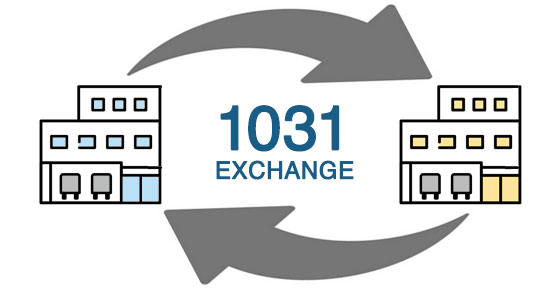
Do you want to sell commercial or investment real estate that has appreciated significantly? One way to defer a tax bill on the gain is with a Section 1031 “like-kind” exchange where you exchange the property rather than sell it. With real estate prices up in some markets (and higher resulting tax bills), the like-kind exchange strategy may be attractive.

A like-kind exchange is any exchange of real property held for investment or for productive use in your trade or business (relinquished property) for like-kind investment, trade or business real property (replacement property).

For these purposes, like-kind is broadly defined, and most real property is considered to be like-kind with other real property. However, neither the relinquished property nor the replacement property can be real property held primarily for sale.

Important change

Under the Tax Cuts and Jobs Act, tax-deferred Section 1031 treatment is no longer allowed for exchanges of personal property — such as equipment […]

By |2022-01-07T22:02:30+00:00January 7th, 2022|1031, investment, New Tax Laws, tcja|0 Comments
Go to Top