Client Portal Login
  Pay Bill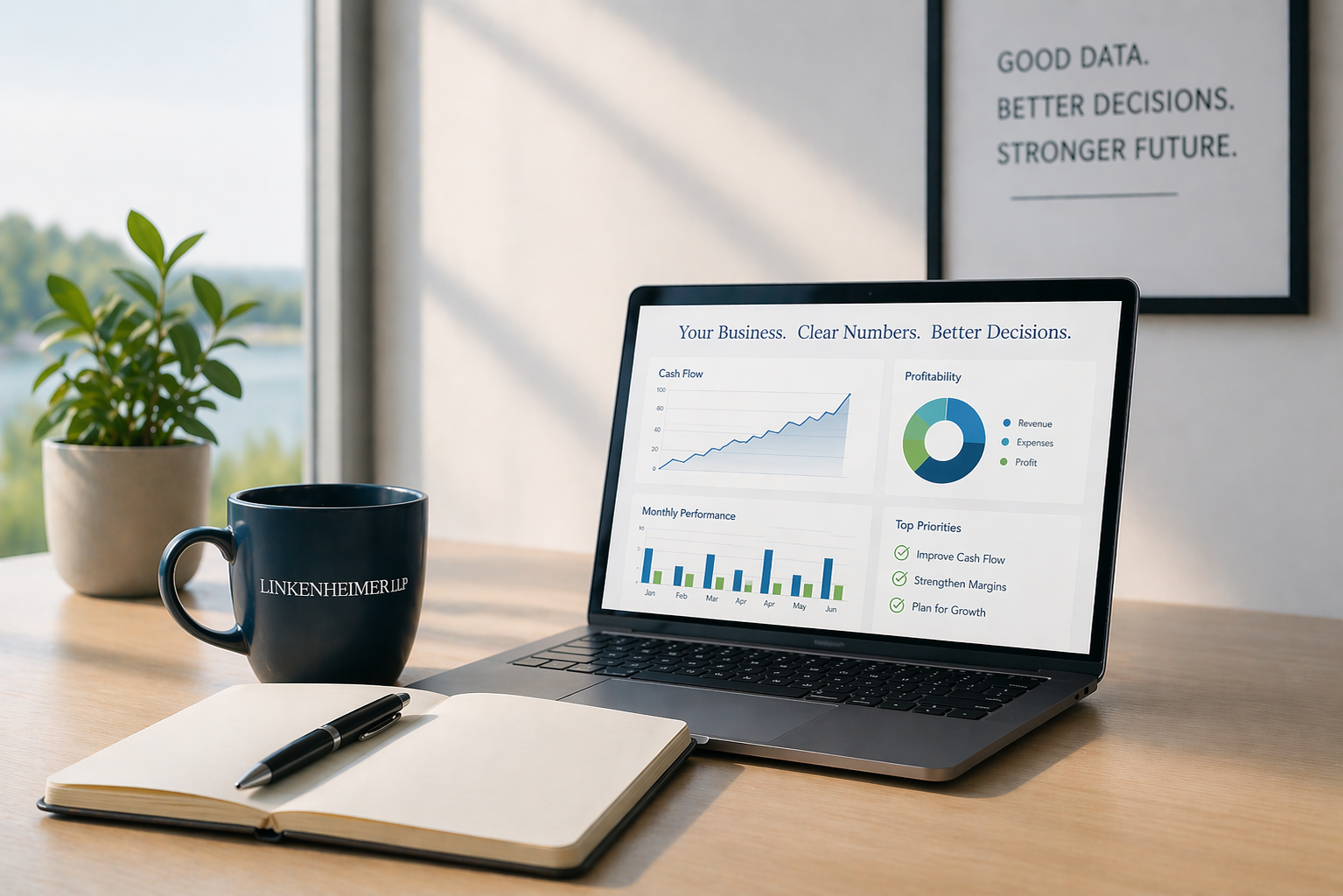
Most businesses do not struggle because they lack financial statements. They struggle because they lack timely, reliable information they can actually use.
That is the real value of a strong accounting system.
A good accounting system does far more than organize transactions for tax season. It helps business owners and management teams understand cash flow, monitor profitability, identify problems earlier, and make better decisions about pricing, hiring, borrowing, and growth. It supports running the business — not just recording it.
When the accounting function is weak, the symptoms are familiar. Month-end closes take too long. Cash flow surprises keep happening. Systems do not connect cleanly. Reports arrive too late to be useful. Leaders end up making important decisions based on incomplete or outdated information. That is not just an accounting issue. It is a business risk.
A stronger system changes that. It brings together the right people, processes, and technology to produce clear reporting and practical insight. That can include timely monthly closes, consistent reconciliations, integrated applications, KPI dashboards, forecasting, and higher-level support that helps management understand what the numbers are actually saying.
This shift is one reason client advisory services, or “CAS”, offered by CPA firms continue to gain momentum and, per surveys, recently grow at a median rate of 17% per year. Business owners’ growing awareness and need in this area continues to nudge CPA firms to offer more recurring services, ongoing accounting, controllership, CFO, and business insights.
For business owners, the lesson is straightforward: when the accounting function is built well, it becomes a source of clarity and control.
That matters because many businesses still operate with fragmented systems and avoidable inefficiencies, and many organizations are still dealing with disconnected tools, duplicate work, and reporting delays that make decision-making harder than it should be.
With a clear move away from cleanup work usually needed after issues arise toward proactive and ongoing support, the shift reflects something important for business owners: accounting is increasingly being treated as an ongoing management function rather than a periodic compliance task.
For many small and midsize businesses, this is where CAS becomes especially valuable. A business may not need a full in-house controller and CFO team, but it still needs visibility, discipline, and insight. A strong outsourced accounting and advisory relationship can help fill that gap by combining day-to-day accounting support with better reporting, forecasting, and decision support.
What should business owners expect?
A strong accounting system should deliver:
- Timely, accurate monthly reporting
- Visibility into cash flow and profitability
- Integrated systems and cleaner processes
- Forward-looking insight, not just historical numbers
- Advice that helps management act, not just comply
Final thought
The real question is not whether a business needs accounting. Every business does.
The real question is whether the accounting function is helping leadership run the business better.
If reporting is late, systems are disconnected, or there is no clear view of cash flow and performance, it may be time to ask a harder question:
Is the accounting function simply documenting the business, or helping manage it?
Call to action
Every business deserves financial information it can trust. If you would like to talk through whether your current accounting systems and processes are serving your goals, we would welcome the conversation. Our team can help you identify gaps, improve visibility, and build a stronger foundation for growth.
At Linkenheimer, we work with business owners year-round to connect tax strategy, operations, and long-term planning, so there are fewer surprises, better decisions, and a clearer path forward.
 Chris Jones