filing

Beware the Ides of March — If You Own a Pass-Through Entity

02_25_19_1075333802_SBTB_560x292

Shakespeare’s words don’t apply just to Julius Caesar; they also apply to calendar-year partnerships, S corporations and limited liability companies (LLCs) treated as partnerships or S corporations for tax purposes. Why? The Ides of March, more commonly known as March 15, is the federal income tax filing deadline for these “pass-through” entities.

Not-so-ancient history

Until the 2016 tax year, the filing deadline for partnerships was the same as that for individual taxpayers: April 15 (or shortly thereafter if April 15 fell on a weekend or holiday). One of the primary reasons for moving up the partnership filing deadline was to make it easier for owners to file their personal returns by the April filing deadline. After all, partnership (and S corporation) income passes through to the owners. The earlier date allows owners to use the information contained in the pass-through entity forms to file their personal returns.

For partnerships with fiscal year ends, tax returns are now due the 15th […]

Why You Shouldn’t Wait to File Your 2018 Income Tax Return

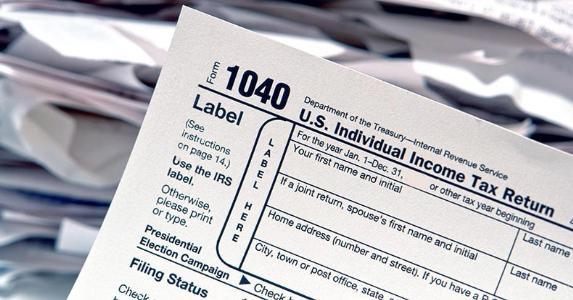
The IRS opened the 2018 income tax return filing season on January 28. Even if you typically don’t file until much closer to the April 15 deadline, this year consider filing as soon as you can. Why? You can potentially protect yourself from tax identity theft — and reap other benefits, too.

What is tax identity theft?

In a tax identity theft scheme, a thief uses your personal information to file a fraudulent tax return early in the filing season and claim a bogus refund.

You discover the fraud when you file your return and are informed by the IRS that the return has been rejected because one with your Social Security number has already been filed for the same tax year. While you should ultimately be able to prove that your return is the legitimate one, tax identity theft can cause major headaches to straighten out and significantly delay your refund.

Filing early may be […]

By |2020-09-03T20:04:18+00:00February 6th, 2019|fraud, New Tax Laws, taxes, w2|0 Comments

IRS Reminds Employers, Other Businesses of Jan. 31 Filing Deadline

IRSbuilding_0[1]

The Internal Revenue Service today reminds employers and other businesses of the Jan. 31 filing deadline that applies to filing wage statements and independent contractor forms with the government.

The Protecting Americans from Tax Hikes (PATH) Act requires employers to file their copies of Form W-2, Wage and Tax Statement, and Form W-3, Transmittal of Wage and Tax Statements, with the Social Security Administration by Jan. 31. The Jan. 31 deadline also applies to certain Forms 1099-MISC, Miscellaneous Income, filed with the IRS to report non-employee compensation to independent contractors. Such payments are reported in box 7 of this form.

This deadline makes it easier for the IRS to verify income that individuals report on their tax returns and helps prevent fraud. Failure to file these forms correctly and timely may result in penalties. As always, the IRS urges employers and other businesses to take advantage of the accuracy, speed and convenience of filing these forms electronically.

An extension of time to file Forms W-2 is no […]

By |2020-09-03T20:04:19+00:00January 29th, 2019|irs, w2|0 Comments

What Will Your Marginal Income Tax Rate Be?

While the Tax Cuts and Jobs Act (TCJA) generally reduced individual tax rates for 2018 through 2025, some taxpayers could see their taxes go up due to reductions or eliminations of certain tax breaks — and, in some cases, due to their filing status. But some may see additional tax savings due to their filing status.

Unmarried vs. married taxpayers

In an effort to further eliminate the marriage “penalty,” the TCJA made changes to some of the middle tax brackets. As a result, some single and head of household filers could be pushed into higher tax brackets more quickly than pre-TCJA. For example, the beginning of the 32% bracket for singles for 2018 is $157,501, whereas it was $191,651 for 2017 (though the rate was 33%). For heads of households, the beginning of this bracket has decreased even more significantly, to $157,501 for 2018 from $212,501 for 2017.

Married taxpayers, on the other hand, won’t be pushed into some middle brackets […]

By |2019-01-18T18:58:22+00:00January 18th, 2019|New Tax Laws, tax rate, taxpayer|0 Comments

Some California Taxpayers are Receiving Erroneous Late Notices

Some California taxpayers are receiving erroneous late notices. Taxpayers who reside in federally declared disaster areas have been granted extra time to accomplish state tax-related tasks, such as filing tax returns and paying taxes due. The CA Franchise Tax Board (FTB) has reported that, due to a systemic issue, some taxpayers who qualify for this relief have received notices assessing late-filing penalties. While the FTB works to update its system and address this issue, taxpayers can contact the FTB on its homepage and click live chat: https://bit.ly/2MG3HMz

If you have questions, you can also contact your Linkenheimer CPA.

By |2018-10-02T19:02:24+00:00October 2nd, 2018|disaster, ftb, irs, tax|0 Comments
Go to Top