fraud

Protect Your Business with a Cybersecurity Assessment

Years ago, it may have seemed like only government agencies with top-secret intel or wealthy international banks had to worry about hackers. Nowadays, even the smallest small business could see its reputation ruined by a data breach, while larger companies could have their sensitive data taken hostage in a ransomware attack that costs millions to resolve.

A cybersecurity assessment can help ensure that your business is taking the proper steps to protect itself. It can also give you a competitive edge by demonstrating to customers and prospects that you take data privacy seriously.

More tech, more risk

Many, if not most, of today’s companies are taking advantage of technologies that allow them to gather, track and analyze customer and financial data. This includes software for mission-critical activities such as payroll, accounts receivable and payable, supply chain management, HR and benefits, and on-site security.

These systems are often cloud-based, meaning the information is stored online so users can access it remotely at any time of day or night. The convenience and analytical power are breathtaking, but they also create a tempting target for cybercriminals and raise the stakes of exposure exponentially.

In truth, the risk of a breach […]

By |2021-11-09T18:04:40+00:00November 9th, 2021|business, fraud|0 Comments

Client Alert: Beware of Payment Instructions Over Email

We have been seeing an increase in criminal cyber-fraud schemes affecting both large and small businesses, individuals and banks. With the increase in remote work, online payments and email usage, a common fraud we are seeing more of is criminals are using a Business Email Compromise (BEC) hack as a way of posing as the company sending the invoice to the recipient, then upon payment, the payors account gets drained with little to no trace of the criminal tied to the fraud.

So how does it work and what is a BEC?

Business email compromise (BEC) or “phishing” is a technique used to gain access to your company email so criminals can impersonate a co-worker, manager or other trusted business partner to steal sensitive data and money. With access to your business email accounts, criminals can steal money through fraudulent wire transfer requests, fake invoices, diverting payroll and more. Protecting your email is essential. BEC emails usually contain no malware and are therefore difficult to detect with common email filtering means.

How does a typical BEC scam work?

A common technique is email spoofing. Email spoofing occurs when the email appears to be sent by […]

By |2021-01-13T19:10:32+00:00January 13th, 2021|fraud|0 Comments

Do You Have a California Business That Collects Sales Tax?

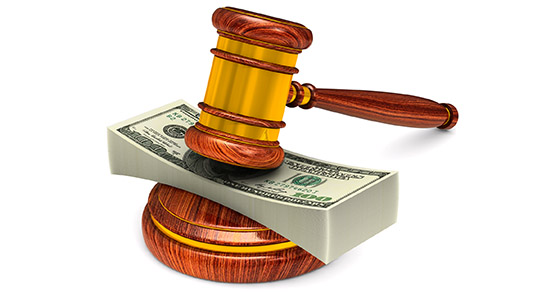
wooden gavel and money on white background. Isolated 3D illustration

California businesses that collect sales tax from customers must correctly report the sales and remit the tax on time or face a possible 25% fraud penalty. The CA Dept. of Tax and Fee Administration (CDTFA) found that one restaurant owner significantly underreported sales and underpaid the related sales tax. On that basis, the CDTFA determined that he was not only subject to the 25% fraud penalty, but that he also met the criteria for a higher penalty of 40%. That is, evidence showed he knowingly collected sales tax to be remitted and failed to remit the full tax collected; also, the amount exceeded an established threshold. The CA Office of Tax Appeals upheld the penalty. If you have questions, please contact your Linkenheimer CPA.

By |2020-09-03T20:03:24+00:00December 11th, 2019|business, ca, CA tax, sales tax|0 Comments

Beware: IRS Scams in Full Swing


irs


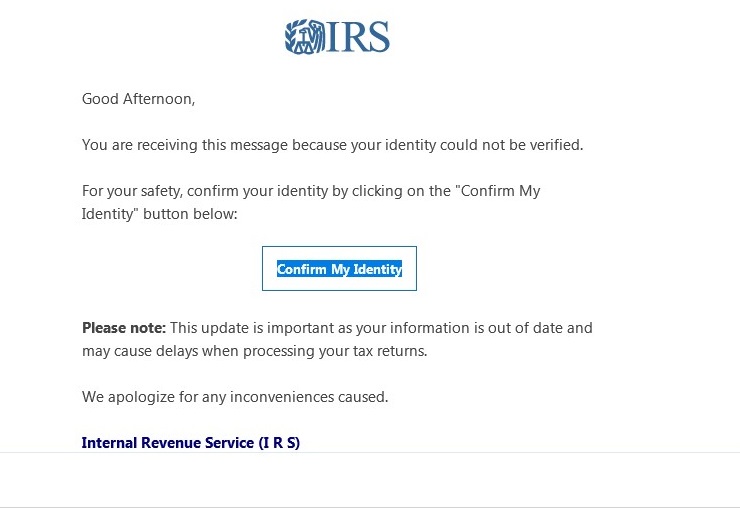
Does the above email look familiar? Hope not, because what might look like a legit email from the IRS is nothing more than another phishing attempt by people looking to collect personal information, credit cards and more. The emails contain what may appear to be an IRS email address, along with their logo (easily found online), but the fact is, you will never receive an email like this. The IRS isn’t in the business of sending emails. In the past, some people have also received phone calls from “the IRS” saying they owe back taxes and if they don’t provide a credit card or wire transfer, the police will be called to seize property. These fraudulent “IRS agents” tend to have heavy accents, blocked numbers and attempt to instill fear in those they speak to, in exchange for credit cards, bank account numbers and other information. Once again, that isn’t how the IRS operates. And should you ever receive an email or a call like that, disregard. If you are convinced it’s legit, call your Linkenheimer CPA and we will work with you to resolve any confusion.

By |2020-09-03T20:05:32+00:00February 17th, 2015|fraud, irs|0 Comments
Go to Top